
Debunking the Hamas Charter: A Response to Claims Against Zionism

Updated: Dec 25, 2025
The American Rant
Published May 1, 2025

The 1988 Hamas Charter is widely recognized as a foundational document for Hamas's ideology and serves as the governing framework for its actions. It contains numerous accusations against Zionism and the Jewish people, including claims that Zionism is a colonialist, racist, and expansionist ideology responsible for global conflict and suffering. But beyond political criticism, the Charter reveals something far darker: explicit antisemitic conspiracy theories, calls for religious warfare, and absolute rejection of Jewish sovereignty in any form.
Only through honest, critical examination of these claims can we demonstrate—through historical context, political evidence, and comparative logic—that they are factually incorrect and deeply misleading. More importantly, it shows that the very accusations Hamas levels against Zionism are, in fact, an accurate description of Hamas's own ideology and practice.
I. What the Hamas Charter Actually Says
Before refuting Hamas's claims, it's essential to see them in the Charter's own words.

The 1988 document is not a political manifesto—it is a religious declaration of eternal war.
On Jews as cosmic enemies: Article 7 invokes a hadith (Islamic tradition) that states: "The Day of Judgment will not come about until Muslims fight the Jews, when the Jew will hide behind stones and trees. The stones and trees will say, 'O Muslims, O Abdullah, there is a Jew behind me, come and kill him.'" This is not a political dispute—it is genocidal theology.
On Jewish conspiracy: Article 22 claims: "With their money, [the Jews] took control of the world media... With their money they stirred revolutions in various parts of the world... They were behind the French Revolution, the Communist revolution... They were behind World War I... and formed the League of Nations through which they could rule the world. They were behind World War II, through which they made huge financial gains... There is no war going on anywhere, without having their finger in it."
This is lifted nearly verbatim from The Protocols of the Elders of Zion, a debunked antisemitic forgery created by the Tsarist secret police. Hamas does not hide its sources—it cites the Protocols explicitly.
On the impossibility of peace: Article 13 states: "Initiatives, and so-called peaceful solutions and international conferences, are in contradiction to the principles of the Islamic Resistance Movement... There is no solution for the Palestinian question except through Jihad."
This is not about negotiating borders or refugees. This is categorical rejection of coexistence.
These are the Charter's core claims, repeated throughout the document.

Hamas does not argue that Israel's policies are unjust—it argues that Jewish sovereignty itself is an offense against God that must be destroyed.
II. Refuting the Colonialism Claim
Hamas asserts that Zionism is a colonialist project imposed by Western imperialism. This claim is historically false.
Zionism is a Jewish national liberation movement, aimed at reestablishing a sovereign homeland for the Jewish people in their ancestral land.

Jews are indigenous to the land of Israel. They established kingdoms there 3,000 years ago (the Kingdoms of Israel and Judah), maintained continuous presence even after Roman expulsion (70 CE and 135 CE), and never relinquished their connection.
Jewish prayers face Jerusalem. Jewish texts reference the land thousands of times. The phrase "Next year in Jerusalem" has been recited at Passover seders for millennia. This is not colonial longing for foreign territory—this is indigenous yearning for home.
Most modern Jewish immigrants to Israel were refugees, not colonizers.
They came from:
~850,000 Jews expelled from Arab and Muslim countries post-1948 (Iraq, Egypt, Yemen, Morocco, Syria, Libya—ancient communities destroyed)
Holocaust survivors with nowhere else to go after the US, UK, and other nations closed their borders
Soviet Jews fleeing systemic antisemitism and persecution
Ethiopian Jews rescued from famine, dictatorship, and forced conversion
These were not agents of empire. They were stateless, persecuted people seeking refuge in the one place that would take them.
Colonialism involves a foreign power exploiting a native population for resources. Britain colonized India. France colonized Algeria. Spain colonized Latin America. In each case, the colonizers had a homeland elsewhere and extracted wealth to send back.

Jews had no other homeland. They were not sent by an empire. They built industries, drained swamps, and created infrastructure—not to extract wealth, but to survive.
When the British Mandate ended, the Jews didn't leave—they stayed, because this was their only home.
By contrast, Arab and Islamic conquests from the 7th century onward imposed foreign rule, language (Arabic), and religion (Islam) across the Middle East and North Africa.

Indigenous populations—Jews, Christians, Berbers, Copts—were subjugated under dhimmi status. If any ideology in the region resembles colonialism, it is the Arab-Islamic conquest that erased indigenous cultures and identities.
Hamas's own charter calls for the establishment of an Islamic state "from the river to the sea"—meaning the total elimination of Jewish sovereignty and the imposition of Sharia law. If that is not expansionist religious colonialism, what is?
III. Refuting the Racism Claim
Hamas accuses Zionism of being inherently racist. This claim is refuted by the structure and practice of the State of Israel.
Israel is a multiethnic democracy where Arab Muslims, Christians, Druze, Bedouins, and other minorities have full citizenship, voting rights, and representation in government.
Arab citizens serve in the Knesset (Israeli parliament), on the Supreme Court, as diplomats, doctors, and business leaders. Arabic is an official language. Israeli Arabs have higher life expectancy, literacy rates, and per capita income than citizens of most Arab-majority states.

Zionism is a movement for Jewish self-determination—not for the oppression of others. It is the belief that Jews, like all peoples, have the right to sovereignty in their ancestral homeland.
This is no different from Palestinian nationalism, Kurdish nationalism, or any other national movement. Claiming that Jewish nationalism alone is racist is itself a form of antisemitism—it denies Jews a right granted to everyone else.
By contrast, the 1988 Hamas Charter uses explicitly antisemitic language, portraying Jews not as a nation or people, but as a cursed and conspiratorial global enemy. It does not distinguish between Zionists and Jews—it condemns all Jews as enemies of Islam and humanity.
Moreover, Hamas's governance record in Gaza reveals the true face of its ideology:
No elections since 2006 (nearly 20 years of authoritarian rule)
Execution of political rivals, including members of Fatah
Persecution of LGBTQ individuals (imprisonment, torture, death)
Enforcement of strict Islamic law on women (dress codes, marriage restrictions, limited mobility)
Use of children as human shields and child soldiers
Diversion of humanitarian aid to build terror tunnels instead of schools and hospitals
If we compare governing philosophies, Israel—despite its challenges—protects minority rights, allows freedom of religion and speech, and holds regular democratic elections. Hamas enforces religious totalitarianism, executes dissenters, and uses its own population as cannon fodder.
Which ideology is actually racist and oppressive?
IV. Refuting the Expansionism Claim
Hamas claims that Zionism seeks to dominate neighboring nations and expand indefinitely. The historical record proves otherwise.
Israel has repeatedly demonstrated willingness to trade land for peace:
1979: Returned the entire Sinai Peninsula to Egypt (a landmass three times the size of Israel) in exchange for a peace treaty
1994: Peace treaty with Jordan, recognizing Jordanian sovereignty
2000: Camp David Summit—Israel offered approximately 95% of the West Bank, all of Gaza, and East Jerusalem as a Palestinian capital. Yasser Arafat rejected the offer without a counteroffer.
2005: Complete withdrawal from Gaza—every Israeli soldier, settler, and military installation removed. Israel left behind greenhouses and infrastructure. Hamas took control in 2007, destroyed what remained, and launched over 20,000 rockets at Israeli civilians in the years since.
2008: Olmert offer—even more generous terms than Camp David. Rejected by the Palestinian Authority.
Israel has accepted every partition plan proposed by the international community:
1937 Peel Commission (rejected by Arabs)
1947 UN Partition Plan (accepted by Jews, rejected by Arabs, followed by invasion by five Arab armies)
Multiple two-state frameworks since
Hamas, by contrast, explicitly rejects any peace agreement that recognizes Israeli sovereignty. Article 13 of the Charter is unambiguous: peace initiatives are "in contradiction to the principles of the Islamic Resistance Movement." The goal is not a Palestinian state alongside Israel—it is a Palestinian state instead of Israel.
While Israel has taken defensive military actions, it has never sought religious conquest of other nations. It does not aim to impose Judaism on Egypt, Lebanon, or Syria. It does not fund terror cells in European capitals or call for global religious war.
Hamas does all of these things. Its charter explicitly calls for jihad until all of historic Israel (Palestine) is under Islamic rule. Iran (Hamas's primary sponsor) funds Hezbollah in Lebanon, militias in Iraq and Syria, and the Houthis in Yemen—pursuing Shia hegemony across the region. This is textbook expansionism cloaked in religious language.
V. Addressing Judea and Samaria: Reframing the Debate
Critics of Israel often point to the situation in Judea and Samaria (misleadingly called the "West Bank") as evidence of apartheid or occupation. This argument inverts cause and effect and relies on ahistorical framing.
First, the facts:
Judea and Samaria are ancestral Jewish lands, named for the ancient Jewish kingdoms that existed there for centuries. These are not "Arab territories"—they are the heartland of Jewish history.
No sovereign Palestinian state ever existed in this territory. Before Israeli control (gained in the defensive 1967 Six-Day War), the land was illegally occupied by Jordan from 1948-1967. Before that, it was under British Mandate. Before that, Ottoman Empire. There has never been an independent Palestinian state in Judea and Samaria.
Israel gained control after being attacked. The 1967 war was not a war of conquest—it was a war of survival. Arab nations massed troops on Israel's borders, expelled UN peacekeepers, and blockaded Israeli shipping. Israel struck first to avoid annihilation.
Every territorial concession Israel has made has been met with increased violence. The withdrawal from Gaza in 2005 did not bring peace—it brought 20,000+ rockets. The lesson is clear: territorial concessions without ideological change and security guarantees do not produce peace—they produce more violence.
The security measures in Judea and Samaria exist because the threat is real and ongoing. Checkpoints, barriers, and military presence are responses to thousands of terror attacks: stabbings, shootings, suicide bombings, car rammings. When security measures were relaxed during the Oslo years, the Second Intifada (2000-2005) killed over 1,000 Israelis.
The Palestinian Authority refuses to be a genuine peace partner. It continues to pay salaries to terrorists and their families ("pay-for-slay" program). It teaches children in schools that all of Israel is "occupied Palestine." It refuses to negotiate without preconditions and refuses to recognize Israel as a Jewish state. President Mahmoud Abbas is in the 19th year of his four-year term—there have been no elections because the PA knows Hamas would win.
Israel's security presence in Judea and Samaria is not evidence of colonial ambition—it is evidence that when you are surrounded by those who seek your destruction, self-defense is not optional.

VI. Connecting Ideology to Behavior: Hamas in Practice
Hamas's ideology is not theoretical. It produces measurable violence, oppression, and suffering—primarily for Palestinians themselves.
Against Israelis:
Over 20,000 rockets fired at Israeli civilians since 2005
Suicide bombings targeting buses, cafes, and markets during the Second Intifada
October 7, 2023 massacre: 1,200 Israelis murdered, including women, children, and elderly; over 240 hostages taken
Use of human shields (storing weapons in schools, hospitals, and mosques; launching rockets from residential areas)
Against Palestinians in Gaza:
Execution of political opponents (Fatah members thrown from rooftops in 2007)
No elections in 19 years
Diversion of billions in international aid to build terror tunnels instead of infrastructure
Persecution of journalists, LGBTQ individuals, and women who violate "modesty" codes
Use of child labor to build tunnels; use of children as fighters and shields

Hamas does not govern—it rules through fear. It does not build—it destroys and then blames Israel for the destruction. It does not seek prosperity for Palestinians—it seeks perpetual conflict to maintain its power and advance its theological vision.
This is the ideology encoded in the 1988 Charter, brought to life.
VII. Conclusion: Who Actually Embodies the Accusations?
The Hamas Charter presents Zionism as colonialist, racist, and expansionist in order to justify violent jihad and delegitimize the Jewish state. These claims collapse under scrutiny.
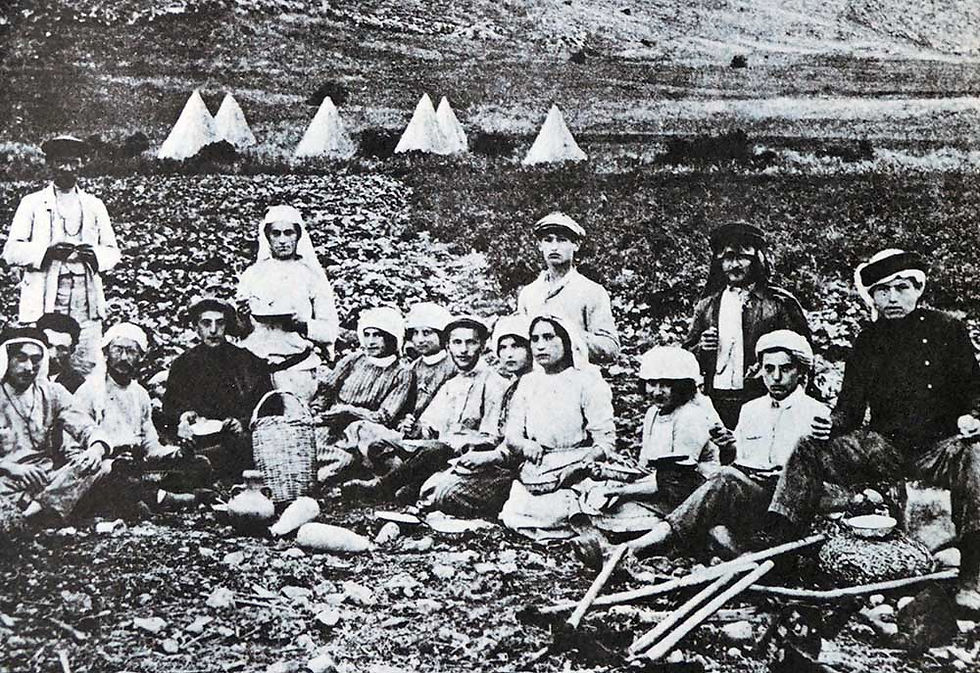
Zionism is a movement of indigenous self-determination, born from centuries of persecution and statelessness. The Jews who built Israel were refugees, not colonizers. They came with nothing and created a thriving, multiethnic democracy in a region dominated by authoritarian regimes.
Israel, for all its imperfections, remains committed to coexistence. It has repeatedly offered land for peace. It protects minority rights. It allows freedom of speech, religion, and assembly. It holds free elections.
Israel is the only country in the Middle East where Arab citizens can criticize their government without fear of imprisonment or death.
Hamas, by contrast, embodies every accusation it levels against Israel:
Colonialism? Hamas seeks to impose Islamic rule over all of historic Palestine, erasing Jewish and Christian presence.
Racism? The Charter is explicitly antisemitic, invoking genocidal religious texts and conspiracy theories.
Expansionism? Hamas is funded by Iran's imperial project and calls for jihad beyond Palestine's borders.
When comparing ideologies, it becomes clear that the violence, intolerance, and supremacist expansion come not from Zionism—but from the radical Islamist doctrines encoded in the Hamas Charter itself.

The Charter is not a cry for justice. It is a blueprint for genocide, cloaked in the language of resistance.
And until the world confronts this reality, peace will remain impossible—not because Israel refuses it, but because Hamas's theology forbids it.


Comments